
Edited by:
redazione
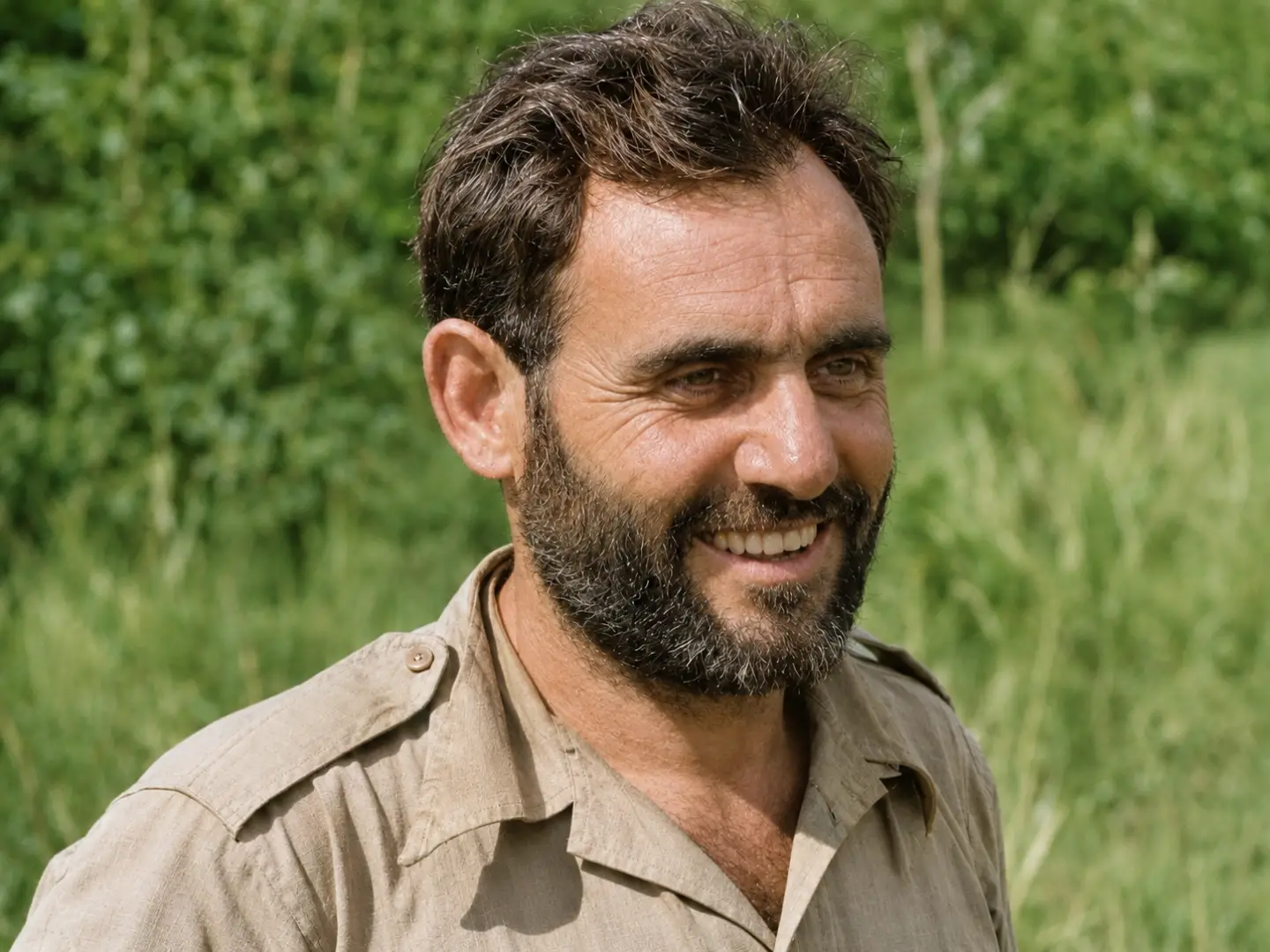
A geologist, mountaineer and explorer from Valtellina: in 1939, he pioneered the route up the Pizzo Cengalo ridge that bears his name, and from 1946 onwards he explored Venezuela and the Andes.
Personal details
Name: Alfonso Vinci
Date of birth: 1 December 1915 - Pilasco, Lower Valtellina
Died: 12 April 1992 - Rome
Nationality: Italian
Occupation: geologist, mountaineer, explorer, writer
Pseudonym / nickname: Bill (code name during the Resistance)
Affiliation: Italian Academic Alpine Club, from 1940
Biography
Alfonso Vinci was born on 1 December 1915 in Pilasco, in the lower Valtellina, and grew up in Como, where his family moved when his father, Calogero Vinci, a Sicilian, set up a business as an electrician. His presence on inalto.org is linked to the granite of the Val Masino, where in the 1930s he opened routes that are still climbed today, and to the mountains of Venezuela, which he climbed and explored after the war.
His academic career was somewhat irregular: whilst working at Siemens, he completed three years of secondary school in one and obtained his classical school-leaving certificate. From 1933, he studied Literature at theUniversity of Milan, writing a thesis on Nietzsche; he then switched to Natural Sciences and graduated in geology in 1940.
During his university years, he climbed the Grignetta under the guidance of Riccardo Cassin, and by 1934 he was already leading the most difficult routes in the range. In the Dolomites, on the Civetta, he repeated the Solleder route on the north-west face and the Tissi route on Torre Trieste. New routes were established between 1936 and 1939, with his Valtellina companions Paolo Riva and Gianelia Bernasconi: in 1939, the north-west face of Monte Agnèr, approximately 1,300 metres high and previously unclimbed, earned him thefor athletic valour, and in the same year he opened the Punta Angela ridge on Pizzo Cengalo, some 350 metres of granite, now a classic route in Val Masino. In 1937, he had attended the Military Mountaineering School in Aosta as an officer cadet; in 1940, he was admitted to the Italian Academic Alpine Club.
When Italy entered the war, he was called up as a reserve officer in the Alpine troops. In 1941, he left for Albania and, upon his return that same year, served as a rock-climbing instructor at the Military Mountaineering School on the courses at Madonna di Campiglio and Catinaccio. On 8 September 1943, he was in Grenoble, serving as a lieutenant in the Monte Rosa Ski Battalion: he left the barracks and walked to Talamona, where he gathered a partisan group of about one hundred men who, in thewinter of 1943–44 he escorted several Allied prisoners to Switzerland. Under the nom de guerre ‘Bill’, he served as chief of staff of the 40th Matteotti Brigade and later of the 1st Valtellina ‘Garibaldi’ Division, and on 28 April 1945 he took part in the liberation of Sondrio. Appointed commander of the partisan police in Como, he was arrested and stripped of his rank following an operation against the Carabinieri.
After the war, he had planned an expedition to Chile with Giusto Gervasutti. Gervasutti died on Mont Blanc in September 1946 and Vinci set off alone that same month. After a brief stay in Brazil, he settled in Venezuela, where he devoted himself to searching for diamonds in the forests of the Orinoco basin; in 1950, he discovered the country’s richest diamond deposit on the Rio Avequì. In the Venezuelan Andes, he climbed Pico Bolívar via the northern glacier in December 1950 and made a film of the ascent. The ascent was questioned by local mountaineers, so Vinci repeated it in February 1951 with the Swiss climber Pierre Kiener, in the presence of Venezuelan journalists and mountaineers; the Caracas press devoted its front pages to him. Together with Kiener, he opened two further new routes on Pico Bolívar. In 1952, he led the Italian Pan-Andean Expedition: setting off from Venezuela on 20 January in a Lincoln car, the expedition crossed Colombia, Ecuador, Peru and Bolivia, arriving in Argentina on 18 April, having made ascents in Colombia, Ecuador and Peru.
For three years he taught geology at the Faculty of Forestry Sciences in Mérida. In the summer of 1953, he led a scientific expedition to Aprada Tepui, in Venezuelan Guayana. On 3 November 1953, the Shiriana Expedition set off from La Paragua, comprising Enrico Middleton Bentivoglio, Arturo Eichler and Jean Liedloff, bound for the headwaters of tributaries of the Orinoco and the Rio Branco. In March 1954, Vinci and Middleton reached territories inhabited by Yanomami groups with no contact with the outside world, including the Samatari, who held them captive for several days. This was followed by the Guayca Expedition, with Giovanni Carmine, fromOctober 1954 to February 1955, and in 1958 the Upper Orinoco Expedition, with engineers Emilio Albani and Ezio Cattaneo, which failed to reach the heights of Cerro Marahuaca. In 1978, he crossed Borneo from west to east, exploring the interior region of the Müller Mountains.
His work as a geologist centred primarily on consultancy for hydroelectric and mining projects in South America and South-East Asia: in the 1950s for Emilio Albani’s ICOS, and from 1960 for Electroconsult in Milan, of which he was a founding partner and chief engineer, carrying out studies for projects such as the Majes project in Peru and the Itaipú Dam on the border between Brazil and Paraguay. From 1955 onwards, he was encouraged to write by Fosco Maraini and the literary agent Erich Linder. His first book, *em* *Samatari* , published in 1955 and translated into five languages, describes the customs and languages of the Yanomami groups he encountered on his expeditions. In his 1969 novel Orogenesi, he reconstructed – using altered names – a story modelled on the Vajont disaster, which he had investigated on behalf of Electroconsult; the publication led to his dismissal from the company, though it rehired him as a consultant years later. He worked until the late 1980s. He died in Rome on 12 April 1992 and is buried in Pilasco.
Mountaineering exploits
Grignetta, the group’s most difficult routes – 1934 – repeat ascents as lead climber (Lombard Pre-Alps)
Castello delle Nevere, west face – 1936 – with Paolo Riva and Camillo Giumelli (Dolomites, Moiazza Group)
Civetta, Solleder route on the north-west face – [before 1940] – repeat ascent (Dolomites)
Torre Trieste, Tissi route – [before 1940] - repeat ascent (Dolomites, Civetta Group)
Pizzo Ligoncio, west-north-west face - 1938 - with Paolo Riva (Val Masino)
Punta Milano, Vinci route - 1938 – with Paolo Riva (Val Masino)
Monte Agnèr, north-west face – 1939 – first ascent of the face, approx. 1,300 m, with Gianelia Bernasconi; Gold Medal for Sporting Valour (Dolomites, Pale di San Martino)
Punta Sertori – 1939 – with Gianelia Bernasconi and Paolo Riva (Val Masino)
Pizzo Cengalo, Punta Angela, Vinci Arête – 1939 – first ascent of the arête, approx. 350 m, with Gianelia Bernasconi and Paolo Riva (Val Masino)
Auyán Tepui – February 1949 – with Félix Cardona (Venezuela, Gran Sabana)
Pico Bolívar, northern glacier – 23 December 1950 – first ascent from this side, with Enrico Middleton (Venezuela, Sierra Nevada de Mérida)
Pico Bolívar, northern glacier – February 1951 – repeat ascent with Pierre Kiener, in the presence of witnesses (Venezuela, Sierra Nevada de Mérida)
Pico Bolívar, north ridge – February 1951 – new route, with Pierre Kiener (Venezuela, Sierra Nevada de Mérida)
Nevado Alto de Ritacuba (5,330 m) - 25 January 1952 – Italian Pan-Andean Expedition (Colombia, Sierra Nevada del Cocuy)
Cerro Quilindaña (4,878 m) - 27 February 1952 – first ascent, Italian Pan-Andean Expedition (Ecuador, Andes)
Nevado Caullaraju, secondary summit (5,500 m) - 13 March 1952 – Italian Pan-Andean Expedition; the peak was subsequently named Nevado Vinci (Peru, Cordillera Blanca)
Pico Bolívar, theEncierro Glacier – March 1953 – new route, with Pierre Kiener and Luis Ruiz Terán (Venezuela, Sierra Nevada de Mérida)
Aprada Tepui – summer 1953 – scientific expedition with Alessandro Bernardi and Pierre Kiener (Venezuela, Guayana)
Cerro Marahuaca – March–April 1958 – attempt, Upper Orinoco Expedition, with Emilio Albani and Ezio Cattaneo (Venezuela)
Borneo – 1978 – west-to-east traverse across the Müller Mountains, with Emilio Albani and the agronomist Tealdi (Indonesia)
Places and names
Vinci Ridge - Pizzo Cengalo, Punta Angela, Val Masino – route first ascended in 1939
Nevado Vinci (5,500 m) - Cordillera Blanca, Peru – secondary summit of Nevado Caullaraju ascended by the 1952 Pan-Andean Expedition
Works
Samatari. Orinoco-Amazon, Bari, Leonardo da Vinci, 1955 (reprinted by Feltrinelli in 1960, Vivalda in 1989)
Diamonds. Gran Sabana – Caronì, Bari, Leonardo da Vinci, 1956 (reissued by CDA & Vivalda 2005)
Cordillera, Bari, Leonardo da Vinci, 1959
Flowers of the Andes, Bari, Leonardo da Vinci, 1959
Dolomites, with Emilio Frisia, Rome, Automobile Club d'Italia, 1961
Occhio di perla, Bari, Leonardo da Vinci, 1966
Orogenesi. A Geological Novel, Bari, De Donato, 1969
Water, Dance, Ash, Milan, Rizzoli, 1973
Tropical Letters, Milan, Mondadori, 1982
The Rum Plateau. Andean Entertainment, Turin, Vivalda, 1990
films: Pico Bolívar, North Face (1951), Italian Pan-Andean Expedition (1952), The Shiriana Expedition (with Enrico Middleton, 1953), Mother Water (1961–1962)
Bibliography
As a writer
no critical study dedicated to Vinci’s writings has been found
As a significant citation
Luisa Mandrino, To Live as if One Were Eternal, Alpine Studio, Orizzonti series, 2013